
Subscribe and receive email notifications of new blog posts.
 RSS Feed
- 2026 | 44 Posts
- 2025 | 49 Posts
- 2024 | 53 Posts
- 2023 | 48 Posts
- 2022 | 48 Posts
- 2021 | 49 Posts
- 2020 | 48 Posts
- 2019 | 48 Posts
- 2018 | 28 Posts
17
Homeowners: How Old Is Your Deck?
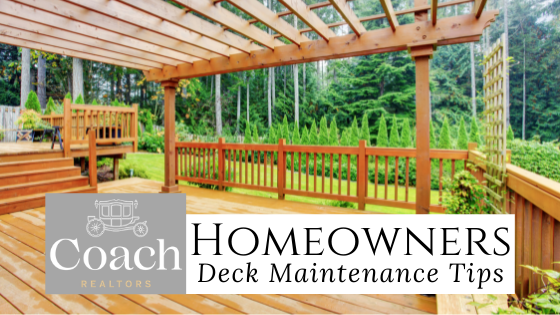
A deck equipped with comfy outdoor furniture, some colorful plants, and a fire pit can be a glorious place to relax and enjoy some great views. And if you decide to sell your home, this outside addition can add value and make your home appealing to buyers. Without proper maintenance, however, your deck and its railings could collapse, fall apart, or fail in some other way. May is National Deck Safety Month and our REALTORS® want to remind you that you need to maintain or replace your deck to make it a safe haven for your family before the high deck traffic of summer. Here are some tips to get you started.
- Regularly Inspect the Deck
Regular inspection is one of the keys to good wood deck maintenance. Inspect your deck for loose nails and other hardware, splintered or soft spots, and rotten or split planks. Be sure to check the wood where the stairs contact the ground and where the ledger boards connect to the side of your home. - Promptly Fix Any Damage
If you encounter raised or exposed nails, remove them and replace them with a wood screw that's longer than the nail. Replace any other hardware that looks rusted and fill in holes with exterior wood filler. Occasionally, it may be necessary to replace damaged or broken deck boards. - Clean the Deck Thoroughly Once a Year
Your deck needs to be exfoliated once a year to remove dirt buildup and ensure sealants can seep deeper into the wood. Remove any items and sweep away debris before cleaning. When it's dry and moderately warm, spray a biodegradable deck-cleaning solution to remove mold, mildew, and bacteria. Scrub with a stiff bristle brush and then rinse with a garden hose or a pressure washer at a low setting. - Stain or Seal the Deck
If your boards need new protective coating, consider staining or sealing them. This will guard against the elements and improve your deck's appearance. Once your deck is fully dry, lightly sand the surface to remove fuzzy or splintery patches. Put down tarps to protect plants and apply painter's tape around the area where the deck meets the siding. Then stain or seal the deck, preferably with a synthetic formula, to protect from warping, cupping, and cracking. A good quality sealant should be waterproof and contain UV sunlight protection.
Signs That Your Deck Needs to Be Replaced
Many homeowners are able to restore their older decks through new hardware, boards, and finishes, but sometimes a deck is beyond saving. How do you know it's time to scrap the deck and get a new one? Here are some tell-tale signs:
- Extensive Damage: If you notice significant damage such as sagging, split boards, rot, soft and crumbling woods, excessive cracks, widespread termite activity, large holes, and excessive cracks, the deck likely needs to be replaced.
- Loose Railings: Unstable railings are not always an indicator that your deck needs to be replaced, but if they couple with other problems, you may need to replace the entire structure.
- Wood Rot: if wood rot has weakened the structure of your deck, you're better off rebuilding the entire deck because it poses a serious safety risk.
- Deteriorating Ledger Boards: When ledger boards become compromised, the entire structure may lean away from the house. You may need to replace your deck because the structure could collapse, a person could trip on the gap, and the gaps between the house and the deck could allow water to seep into the support framework.
- Questionable Posts: If you notice rot damage, large cracks, or advanced erosion around the posts, you may need to replace the entire structure. Damaged posts can break without warning.
- Old Age: A typical wood deck has a lifespan of 15 to 40 years, depending on the materials used, exposure to the elements, and the quality of routine maintenance. If your deck is over 20 years old or the costs of repairs start to get close to the cost of replacement, getting a new deck is definitely worthwhile.
Are you searching for a new home with an eye-catching and well-maintained deck? We can help. Contact us today to tour our beautiful Nassau Country homes for sale or Suffolk County homes for sale.